







You built a business to create more freedom. Yet your calendar is full, your team still needs your approval, and the project that could change your future keeps moving to next month. You are working hard, but the work that matters most is waiting.
For experienced business owners, the next breakthrough often begins with one clear decision about where their attention belongs.
Until that decision is made, every good idea can feel equally urgent. The result is a demanding business that leaves little room for the life its owner wants to live.
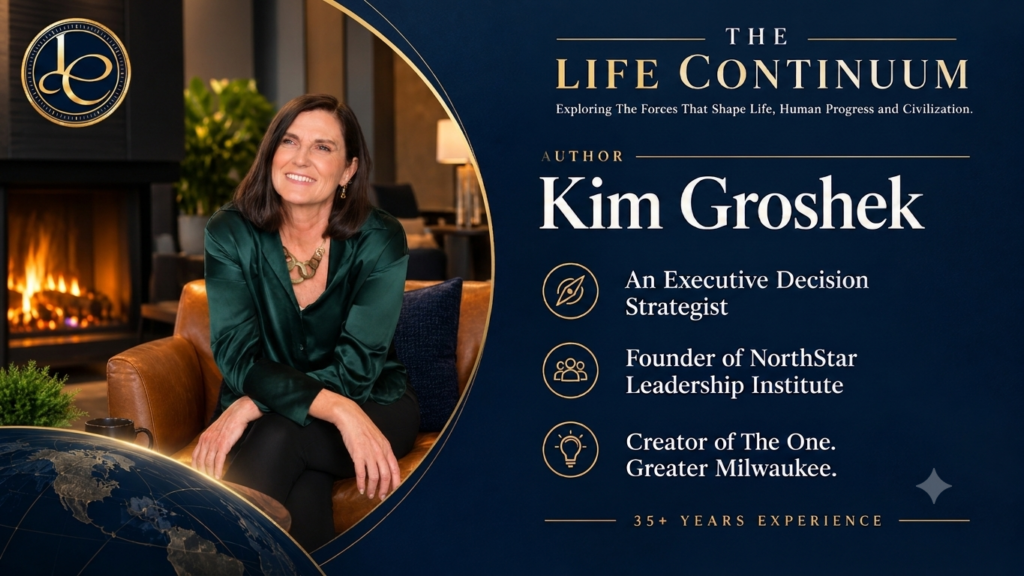
Across more than 35 years of consulting work, I have worked in environments where decisions carry real consequences, including mergers and acquisitions, organizational turnarounds, and governance. That experience shapes the question I bring to founders today: What is the decision that would allow the most important work to move forward?
The cost of keeping everything open
A capable founder can see possibilities everywhere. A new partnership could open a market. A book could share years of knowledge. A new offer could bring in revenue. Better systems could help the team work independently.
Each possibility may deserve consideration. The difficulty comes when all of them remain active at once. Attention gets divided, commitments compete, and the owner becomes the person holding everything together.
Consider an owner who wants to step back from daily operations. She also wants to launch a program, update her website, and explore a partnership. Meanwhile, her team sends routine questions to her throughout the day. Without a clear priority, she may spend months making small improvements while remaining just as essential to every decision.
Her first useful decision might be to give one team member responsibility for a recurring process, with clear limits and a scheduled review. That choice creates room for the next stage of the business. It also requires her to accept that someone else may do the work differently.
Start with what you want your business to make possible
Before choosing another project, ask what you want your business to support in this season of life. Perhaps you want time to travel, afternoons with grandchildren, or space to develop work that has been waiting for years. Perhaps you want a business that can operate while you take a real break.
Make the answer specific enough to guide a choice. “I want more freedom” is a starting point. “I want to take two weeks away without approving routine work” gives you something concrete to build toward.
Then look honestly at your current week. Where does your time go? Which responsibilities truly require your expertise? Which ones stay with you because that is how the business has always worked?
This is where a mindful pause becomes practical. A few quiet minutes before accepting another commitment can reveal whether it supports your direction or simply fills your calendar.
Move from seeing to deciding
I created The One Decision Method™ to help people turn competing ideas into a clear priority and meaningful action. The process moves through SEE, DECIDE, DO YOU, and MOVEMENT.
SEE means taking an honest look at the situation. Name what is unfinished, what keeps returning to your attention, and what depends on you. Separate the actual problem from the tasks surrounding it. A stalled website, for example, may reflect an unresolved decision about whom you serve and what you sell.
DECIDE means choosing what deserves your focus now. Ask which choice would make other choices easier. You may need to select one offer, set a boundary, transfer responsibility, or stop a project whose purpose no longer fits.
A decision also needs an agreement with yourself about what will wait. Otherwise, yesterday’s competing priorities will return to tomorrow’s calendar.
Make the decision fit your life
DO YOU means considering the person who must carry out the decision. Your experience, values, working style, and available capacity matter. A strategy that requires energy you do not have is difficult to sustain, even if it looks impressive on paper.
I use a simple lens: time, energy, and money. What will this commitment require in each area? What resources are available? What will you need to change to follow through?
For an established owner, that may mean choosing a smaller number of meaningful commitments and getting help with implementation. It may mean building around planned travel or protecting time with family. Those choices deserve a place in the plan from the beginning.
Give the decision somewhere to go
MOVEMENT turns the choice into visible action. Define a result you can recognize, identify the next step, and put time on the calendar to do it. When other people are involved, agree on who owns the work, what authority they have, and when you will review progress.
If your priority is reducing your role in daily operations, begin with one recurring responsibility. Document the outcome, assign ownership, and establish when a question truly needs your involvement. Review what happens and adjust the agreement as you learn.
You do not need to solve the entire business in one sitting. You do need to follow your decision far enough to learn whether it is creating the change you intended.
Choose the work that opens your next chapter
There will always be another idea and another opportunity. The ability to choose becomes more valuable as your experience grows, because you can see so many things worth doing.
Before you add another item to your list, pause and ask: What am I ready to finish, hand over, or release so I can make room for what matters now?
Write down your answer. Choose one action you can complete this week. Give it a place on your calendar and, where needed, make a clear agreement with the people involved.
Your next chapter begins to take shape when your daily choices support the life you want your business to make possible.
To explore the decision keeping your business stuck, download my free One Decision™ Field Guide at kimgroshek.com/one-decision-field-guide.

About Kim Groshek
Kim Groshek is an Executive Decision Strategist, founder of NorthStar Leadership Institute, and creator of The One Decision Method™. With more than 35 years of consulting experience spanning mergers and acquisitions, organizational turnarounds, and governance, she helps established business owners make consequential decisions and move important projects toward completion. An author, speaker, and podcast host, Kim brings a practical focus on time, energy, and money to her work.
She helps owners clarify priorities, reduce their involvement in daily operations, and create room for the next chapter of their business and life. Learn more at kimgroshek.com.