


The Life Continuum
Download Magazine Editions
Search
  • Home
  • BODY, MIND & MEDICINE

    BODY, MIND & MEDICINE

    Everything shaping the human body, mind, health, ageing and performance.

    At 82, I Have a Simple Dream | Dr. Naresh Chand, M.S., Ph.D., Retired Neuropharmacologist and Former Health Scientist Administrator, NIH/NIDA | Washington DC-Baltimore Area

    At 82, I Have a Simple Dream | Dr. Naresh Chand, M.S., Ph.D., Retired Neuropharmacologist and Former Health Scientist Administrator, NIH/NIDA | Washington DC-Baltimore Area

    Body, Mind & Medicine EDITOR'S PICKS EDITOR'S PICKS EXPERT SPOTLIGHTS EXPERT SPOTLIGHTS Human Progress
    November 2, 2026
    The Shortest Path to the Brain Runs Through the Nose | Lawrence Fine, CEO and Co-Founder of AGCP Farmacêuticos, Lisbon

    The Shortest Path to the Brain Runs Through the Nose | Lawrence Fine, CEO and Co-Founder of AGCP Farmacêuticos, Lisbon

    Body, Mind & Medicine EDITOR'S PICKS EDITOR'S PICKS EXPERT SPOTLIGHTS EXPERT SPOTLIGHTS INNOVATIONS Science & Technology THE LIFE COUNCIL
    October 21, 2026
    Physicians Don’t Have to Sell Their Practices to Survive Ben Phillips, CEO of PromiseCare, San Francisco Bay Area

    Physicians Don’t Have to Sell Their Practices to Survive | Ben Phillips, San Francisco Bay Area

    Body, Mind & Medicine EXPERT SPOTLIGHTS ORGANIZATION SPOTLIGHTS
    October 17, 2026
    The Next Great Life Sciences Investments May Be Building the Machinery Behind Biology

    The Next Great Life Sciences Investments May Be Building the Machinery Behind Biology

    Body, Mind & Medicine Science & Technology
    October 4, 2026
    Healthcare Is Leaving the Hospital. Its Technology Has to Catch Up.

    Healthcare Is Leaving the Hospital. Its Technology Has to Catch Up

    EDITOR'S PICKS EXPERT SPOTLIGHTS INNOVATIONS ORGANIZATION SPOTLIGHTS THE LIFE COUNCIL Uncategorized
    September 20, 2026
  • SCIENCE & TECHNOLOGY

    SCIENCE & TECHNOLOGY

    The knowledge and technologies shaping what humans can discover, build and achieve.

    From Chemistry For Dummies to Artificial Intelligence

    From Chemistry For Dummies to Artificial Intelligence: A Father’s Unlikely Journey into Gene Therapy | Andrew Venables, Founder and CEO of Loxegen, Australia

    EDITOR'S PICKS EXPERT SPOTLIGHTS ORGANIZATION SPOTLIGHTS Science & Technology
    October 23, 2026
    The Shortest Path to the Brain Runs Through the Nose | Lawrence Fine, CEO and Co-Founder of AGCP Farmacêuticos, Lisbon

    The Shortest Path to the Brain Runs Through the Nose | Lawrence Fine, CEO and Co-Founder of AGCP Farmacêuticos, Lisbon

    Body, Mind & Medicine EDITOR'S PICKS EDITOR'S PICKS EXPERT SPOTLIGHTS EXPERT SPOTLIGHTS INNOVATIONS Science & Technology THE LIFE COUNCIL
    October 21, 2026
    The Next Great Life Sciences Investments May Be Building the Machinery Behind Biology

    The Next Great Life Sciences Investments May Be Building the Machinery Behind Biology

    Body, Mind & Medicine Science & Technology
    October 4, 2026
    The Next Great Life Advisor May Not Help You Set Goals. They May Help You See Your Life as a Whole

    The Next Great Life Advisor May Not Help You Set Goals. They May Help You See Your Life as a Whole.

    EDITOR'S PICKS EXPERT SPOTLIGHTS THE LIFE COUNCIL Uncategorized
    September 20, 2026
    Cities Are Learning to Rehearse Before They Build

    Cities Are Learning to Rehearse Before They Build

    EDITOR'S PICKS EXPERT SPOTLIGHTS EXPERT SPOTLIGHTS INNOVATIONS THE LIFE COUNCIL Uncategorized
    September 20, 2026
  • HUMAN PROGRESS

    HUMAN PROGRESS

    How humans learn, adapt, create and build a better future.

    At 82, I Have a Simple Dream | Dr. Naresh Chand, M.S., Ph.D., Retired Neuropharmacologist and Former Health Scientist Administrator, NIH/NIDA | Washington DC-Baltimore Area

    At 82, I Have a Simple Dream | Dr. Naresh Chand, M.S., Ph.D., Retired Neuropharmacologist and Former Health Scientist Administrator, NIH/NIDA | Washington DC-Baltimore Area

    Body, Mind & Medicine EDITOR'S PICKS EDITOR'S PICKS EXPERT SPOTLIGHTS EXPERT SPOTLIGHTS Human Progress
    November 2, 2026
    One Decision That Helps Business Owners Create More Freedom | Kim Groshek, Executive Decision Strategist, Greater Milwaukee

    One Decision That Helps Business Owners Create More Freedom | Kim Groshek, Executive Decision Strategist, Greater Milwaukee

    Capital EDITOR'S PICKS EDITOR'S PICKS EDITOR'S PICKS EXPERT SPOTLIGHTS EXPERT SPOTLIGHTS EXPERT SPOTLIGHTS Human Progress Society & Civilization
    October 21, 2026
    The University's Next Rival Isn't Another University

    The University’s Next Rival Isn’t Another University. It’s the Companies That Hire Its Graduates.

    EDITOR'S PICKS Human Progress ORGANIZATION SPOTLIGHTS
    October 11, 2026
    The Next Big EdTech Opportunity Is Not Teaching More. It Is Proving What People Can Do

    The Next Big EdTech Opportunity Is Not Teaching More. It Is Proving What People Can Do

    EDITOR'S PICKS EXPERT SPOTLIGHTS ORGANIZATION SPOTLIGHTS THE LIFE COUNCIL Uncategorized
    September 20, 2026
    The Environmental Movement Is Gaining a New Superpower: Seeing Nature as It Changes

    The Most Important New Technology in Human Development May Be the One That Learns How You Learn

    EDITOR'S PICKS EDITOR'S PICKS EXPERT SPOTLIGHTS EXPERT SPOTLIGHTS INNOVATIONS INNOVATIONS THE LIFE COUNCIL Uncategorized
    September 20, 2026
  • RELATIONSHIPS & WELLBEING

    RELATIONSHIPS AND WELLBEING

    How relationships and inner life shape long-term wellbeing..

    Relationships Are Becoming Something People Learn to Build, Not Just Something They Hope Will Work

    Relationships Are Becoming Something People Learn to Build, Not Just Something They Hope Will Work

    EDITOR'S PICKS EXPERT SPOTLIGHTS THE LIFE COUNCIL Uncategorized
    September 20, 2026
    AI Is Not Replacing Life Coaches. It Is Sorting Them.

    AI Is Not Replacing Life Coaches. It Is Sorting Them.

    EDITOR'S PICKS EXPERT SPOTLIGHTS ORGANIZATION SPOTLIGHTS THE LIFE COUNCIL
    September 20, 2026
    Your Coach Used to See You for an Hour. The Future May Let Them See the Pattern

    Your Coach Used to See You for an Hour. The Future May Let Them See the Pattern

    EDITOR'S PICKS EXPERT SPOTLIGHTS THE LIFE COUNCIL Uncategorized
    September 20, 2026
  • CAPITAL

    CAPITAL

    How capital and investment decisions shape economic power and progress.

    One Decision That Helps Business Owners Create More Freedom | Kim Groshek, Executive Decision Strategist, Greater Milwaukee

    One Decision That Helps Business Owners Create More Freedom | Kim Groshek, Executive Decision Strategist, Greater Milwaukee

    Capital EDITOR'S PICKS EDITOR'S PICKS EDITOR'S PICKS EXPERT SPOTLIGHTS EXPERT SPOTLIGHTS EXPERT SPOTLIGHTS Human Progress Society & Civilization
    October 21, 2026
    The Next Generation Is Not Inheriting a Portfolio. It Is Inheriting a Capital Strategy.

    The Next Generation Is Not Inheriting a Portfolio. It Is Inheriting a Capital Strategy.

    EDITOR'S PICKS ORGANIZATION SPOTLIGHTS THE LIFE COUNCIL
    September 20, 2026
    Healthcare Venture Capital Has Become a Test of Proof, Not Promise

    Healthcare Venture Capital Has Become a Test of Proof, Not Promise

    EDITOR'S PICKS EDITOR'S PICKS EXPERT SPOTLIGHTS EXPERT SPOTLIGHTS INNOVATIONS ORGANIZATION SPOTLIGHTS THE LIFE COUNCIL
    September 20, 2026
  • SOCIETY & CIVILIZATION

    SOCIETY AND CIVILIZATION

    How societies organize themselves and how civilizations endure.

    One Decision That Helps Business Owners Create More Freedom | Kim Groshek, Executive Decision Strategist, Greater Milwaukee

    One Decision That Helps Business Owners Create More Freedom | Kim Groshek, Executive Decision Strategist, Greater Milwaukee

    Capital EDITOR'S PICKS EDITOR'S PICKS EDITOR'S PICKS EXPERT SPOTLIGHTS EXPERT SPOTLIGHTS EXPERT SPOTLIGHTS Human Progress Society & Civilization
    October 21, 2026
    When Waste Becomes a Supply Chain Strategy

    When Waste Becomes a Supply Chain Strategy

    EDITOR'S PICKS INNOVATIONS ORGANIZATION SPOTLIGHTS THE LIFE COUNCIL
    September 20, 2026
    Cities Are Learning to Rehearse Before They Build

    Cities Are Learning to Rehearse Before They Build

    EDITOR'S PICKS EXPERT SPOTLIGHTS EXPERT SPOTLIGHTS INNOVATIONS THE LIFE COUNCIL Uncategorized
    September 20, 2026
    The Next Real Estate Advantage May Be Everything Around the Building

    The Next Real Estate Advantage May Be Everything Around the Building

    EDITOR'S PICKS INNOVATIONS ORGANIZATION SPOTLIGHTS THE LIFE COUNCIL
    September 20, 2026
    The Second Job Nobody Was Hired to Do

    The Second Job Nobody Was Hired to Do

    EDITOR'S PICKS EDITOR'S PICKS EXPERT SPOTLIGHTS EXPERT SPOTLIGHTS INNOVATIONS INNOVATIONS ORGANIZATION SPOTLIGHTS ORGANIZATION SPOTLIGHTS THE LIFE COUNCIL THE LIFE COUNCIL
    September 20, 2026
Reading: The Next Big EdTech Opportunity Is Not Teaching More. It Is Proving What People Can Do
Share
At 82, I Have a Simple Dream | Dr. Naresh Chand, M.S., Ph.D., Retired Neuropharmacologist and Former Health Scientist Administrator, NIH/NIDA | Washington DC-Baltimore Area

At 82, I Have a Simple Dream | Dr. Naresh Chand, M.S., Ph.D., Retired Neuropharmacologist and Former Health Scientist Administrator, NIH/NIDA | Washington DC-Baltimore Area

November 2, 2026
From Chemistry For Dummies to Artificial Intelligence

From Chemistry For Dummies to Artificial Intelligence: A Father’s Unlikely Journey into Gene Therapy | Andrew Venables, Founder and CEO of Loxegen, Australia

October 23, 2026
One Decision That Helps Business Owners Create More Freedom | Kim Groshek, Executive Decision Strategist, Greater Milwaukee

One Decision That Helps Business Owners Create More Freedom | Kim Groshek, Executive Decision Strategist, Greater Milwaukee

October 21, 2026
The Shortest Path to the Brain Runs Through the Nose | Lawrence Fine, CEO and Co-Founder of AGCP Farmacêuticos, Lisbon

The Shortest Path to the Brain Runs Through the Nose | Lawrence Fine, CEO and Co-Founder of AGCP Farmacêuticos, Lisbon

October 21, 2026
THE LIFE CONTINUUMTHE LIFE CONTINUUM
Font ResizerAa
  • Home
  • BODY, MIND & MEDICINE
  • SCIENCE & TECHNOLOGY
  • HUMAN PROGRESS
  • RELATIONSHIPS & WELLBEING
  • CAPITAL
  • SOCIETY & CIVILIZATION
Search
  • Home
  • BODY, MIND & MEDICINE
  • SCIENCE & TECHNOLOGY
  • HUMAN PROGRESS
  • RELATIONSHIPS & WELLBEING
  • CAPITAL
  • SOCIETY & CIVILIZATION
Have an existing account? Sign In
THE LIFE CONTINUUM > Blog > Human Progress > EDITOR'S PICKS > The Next Big EdTech Opportunity Is Not Teaching More. It Is Proving What People Can Do
EDITOR'S PICKSEXPERT SPOTLIGHTSORGANIZATION SPOTLIGHTSTHE LIFE COUNCILUncategorized

The Next Big EdTech Opportunity Is Not Teaching More. It Is Proving What People Can Do

The Life Continuum Editorial Desk
Last updated: September 20, 2026 3:01 am
Last updated: September 20, 2026
13 Min Read
Share
The Next Big EdTech Opportunity Is Not Teaching More. It Is Proving What People Can Do
SHARE

A person finishes an online course, receives a certificate and adds it to a growing collection of digital credentials.


But what does the certificate actually tell anyone?
 

The Life Continuum Editorial Desk


It says the person completed something. It may indicate that they passed an assessment. It may demonstrate persistence and genuine interest. Yet it does not necessarily reveal whether they can apply what they learned when the problem looks different from the one in the course.

That distinction is becoming increasingly important.

Artificial intelligence is making explanations, tutorials, exercises and personalised assistance dramatically more abundant. As the cost of delivering instruction falls, the scarce thing may no longer be educational content.

It may be credible evidence of capability.

This could push EdTech into its most interesting phase yet, away from simply distributing education and toward creating environments where people learn by doing, receive continuous feedback and gradually build an observable record of what they are capable of.

When Content Stops Being the Product

The first generations of digital education solved a very real problem.

They made education easier to access.

A learner no longer had to be physically present in a particular classroom. Recorded lectures could be watched at convenient times. Online courses could reach enormous audiences. Search made information available almost instantly.

But these systems largely inherited the basic structure of traditional education.

There was a course. There were lessons. There was an assessment. Then there was a certificate.

Artificial intelligence changes the economics of that model.

If a learner can ask an intelligent system to explain a concept in five different ways, generate examples at exactly the right difficulty, practise a skill repeatedly and receive immediate feedback, the value of simply possessing another library of lessons begins to decline.

This does not make content irrelevant. Good explanations remain important.

But content is becoming easier to produce, personalise and consume.

The more interesting question becomes what happens between understanding something and being able to do it.

That is where the next generation of EdTech may be built.

The Classroom Becomes a Practice Environment

Consider the difference between watching someone perform a skill and having to perform it yourself.

A medical student can watch a procedure. An aspiring engineer can read about a system. A manager can study negotiation techniques. A programmer can watch an explanation of software architecture.

None of those experiences proves that the learner can perform under unfamiliar conditions.

Simulation changes that.

Digital environments can increasingly create situations in which learners have to make decisions rather than simply select answers. AI can play the role of a customer, patient, colleague, interviewer, client or opponent. A learner can attempt something, make mistakes, receive feedback and try again.

The experience becomes much closer to apprenticeship.

This is an important development because many of the capabilities that matter most in modern work are difficult to teach through conventional testing.

Judgement is contextual. Communication depends on the person in front of you. Leadership emerges through decisions. Creativity requires responding to unfamiliar constraints. Technical competence often becomes visible only when something goes wrong.

These capabilities require practice.

EdTech can increasingly create more opportunities to practise them.

The platform therefore stops behaving like a digital textbook and starts behaving more like a training ground.

The New Credential May Be the Evidence Behind It

If learning becomes more practical, assessment can change with it.

Instead of asking whether someone remembers the material, systems can increasingly capture how they approached a problem, whether they improved after feedback, how they responded to new circumstances and whether they could transfer a concept into a different situation.

That creates the possibility of a much richer representation of skill.

Imagine two people applying for the same role.

Both have completed similar courses. Both possess similar qualifications. But one can demonstrate a history of solving increasingly complex simulated problems, responding effectively to feedback and applying knowledge across different contexts.

The difference is subtle but profound.

The credential is no longer simply a statement that learning occurred.

It begins to carry evidence of capability.

This could eventually influence employers, professional bodies and education providers.

It may also create new businesses around skills verification, competency assessment, digital portfolios and practical simulations.

The opportunity is particularly significant because employers have long struggled with the gap between credentials and actual ability.

A degree can tell an employer where someone studied. A certificate can tell them what someone completed. A richer skills record could begin to show what that person can actually perform.
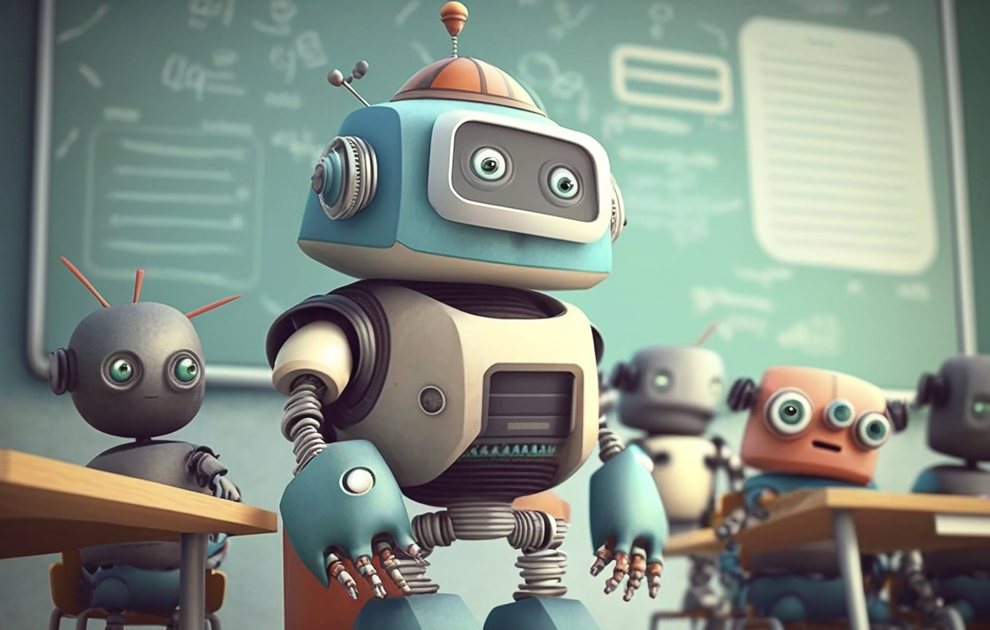
The Most Important New Technology in Human Development May Be the One That Learns How You Learn


AI Tutors Could Become AI Coaches

There is an even more interesting evolution taking place.

An AI tutor primarily answers questions.

An AI coach would pay attention to the learner.

It might notice that someone understands concepts but consistently struggles to apply them. It might recognise that a learner gives up when problems become unfamiliar. It might identify a recurring misunderstanding that appears across different tasks. It might deliberately increase difficulty because the learner is progressing faster than expected.

That is a fundamentally different relationship.

The system is no longer simply responding to requests. It is helping manage development.

This is where adaptive learning becomes more consequential. Personalisation is often described as changing the difficulty or recommending the next lesson. The deeper opportunity is to personalise the developmental journey itself.

One learner may need more explanation. Another needs more practice. A third needs harder problems. A fourth needs to learn how to work independently rather than continually asking for assistance.

The ideal system may therefore know when to explain, when to challenge, when to step back and when to insist that the learner attempt something without help.

That last capability may prove especially important.

A system that makes every task effortless can create the appearance of learning without necessarily creating the underlying ability.

The best EdTech may sometimes be the technology that refuses to give the answer too quickly.

From Education Platforms to Capability Platforms

This shift could also change the boundaries of the EdTech industry.

A traditional education platform begins with education as its organising principle.

A capability platform begins with a human goal.

Someone wants to become a better manager. Someone else wants to become a cybersecurity professional. Another person wants to communicate more effectively. A student wants to understand whether they might thrive in engineering, medicine, research or design.

The platform does not necessarily begin by asking which course they want.

It asks what they are trying to become capable of doing.

That could lead to a very different architecture.

Assessment identifies the starting point. Personalised instruction fills knowledge gaps. Simulations create practice. AI provides feedback. Projects generate evidence. Human experts intervene where judgement or mentorship matters most. The system continually updates its understanding of the learner.

Education becomes a loop rather than a sequence.

Learn. Attempt. Fail. Understand. Try again. Demonstrate. Advance.

That loop is much closer to how genuine expertise develops.

The Opportunity Beyond School

The largest market for this transformation may not be children.

It may be everyone who has to keep becoming capable throughout a long working life.

Industries are changing quickly enough that initial education cannot reasonably prepare a person for everything they will need decades later. New tools appear. Roles evolve. Entire occupations acquire new expectations.

People therefore need a way to keep developing without repeatedly returning to a conventional educational institution.

This creates a potentially enormous role for EdTech in professional development, career transitions, vocational training and lifelong learning.

A worker may not need another two-year qualification. They may need to acquire five specific capabilities, practise them in realistic situations and demonstrate that they can perform them.

An organisation may not need another generic training programme. It may need to know whether its workforce can actually handle a new technology, regulatory environment or operating model.

An individual may not need another certificate. They may need credible evidence that they are ready for the next opportunity.

This is where EdTech starts to overlap with recruitment, workforce development and professional identity.

The education company of tomorrow could therefore find itself competing not only with other education companies, but with traditional credential providers, corporate training businesses and parts of the recruitment industry.

What Should Remain Human?

There is a temptation to interpret all of this as an argument for replacing teachers.

It is not.

The more sophisticated possibility is that technology takes over some of the repetitive work surrounding development while making human expertise more valuable where it matters most.

A teacher who spends less time repeating the same explanation can spend more time understanding a student’s difficulties. A professional mentor can focus on judgement and experience rather than basic instruction. An expert can intervene when a learner reaches a genuinely ambiguous problem that cannot be reduced to a predictable answer.

There is also something education does that technology cannot easily reproduce: participation in a human community.

People learn from peers. They develop confidence through belonging. They encounter perspectives they did not seek. They discover interests through relationships and unexpected experiences.

Technology can personalise learning, but human development is not merely an information problem.

The strongest EdTech companies will understand that distinction.

The opportunity is not to make education less human.

It is to make technology better at supporting the parts of development that have historically been constrained by time, scale and access.

For a century, educational success has been unusually easy to record and surprisingly difficult to observe.

We know which school someone attended. We know which examinations they passed. We know which courses they completed.

We have been much less precise about what they can actually do when confronted with something new.

That may be changing.

As intelligent systems make instruction increasingly abundant, the most valuable EdTech may become the technology that creates meaningful challenges, observes performance, improves practice and builds trustworthy evidence of capability.

The great shift may therefore be from learning as an event to learning as a continuous process of becoming capable.

And when that happens, the most important record of an education may no longer be the certificate hanging on the wall.

It may be the person who emerges from it.

The Life Continuum Editorial Desk

TAGGED:adaptive learningartificial intelligencedigital learningEdTecheducation innovationeducation technologyemployabilityfuture skillslifelong learningskills based education
Share This Article
Facebook Email Copy Link Print

Join THE LIFE CONTINUUM Free

Receive our stories, insights and magazine editions, delivered straight to your inbox.
Free Magazine Subscription

Recently Published

Updated continuously between issues

At 82, I Have a Simple Dream | Dr. Naresh Chand, M.S., Ph.D., Retired Neuropharmacologist and Former Health Scientist Administrator, NIH/NIDA | Washington DC-Baltimore Area

At 82, I Have a Simple Dream | Dr. Naresh Chand, M.S., Ph.D., Retired Neuropharmacologist and Former Health Scientist Administrator,…

Body, Mind & Medicine EDITOR'S PICKS EDITOR'S PICKS EXPERT SPOTLIGHTS EXPERT SPOTLIGHTS Human Progress
November 2, 2026

From Chemistry For Dummies to Artificial Intelligence: A Father’s Unlikely Journey into Gene Therapy | Andrew Venables, Founder and CEO of Loxegen, Australia

When his son was diagnosed with cystic fibrosis, Andrew Venables, a lawyer and finance executive with no scientific background, embarked…

EDITOR'S PICKS EXPERT SPOTLIGHTS ORGANIZATION SPOTLIGHTS Science & Technology
October 23, 2026

One Decision That Helps Business Owners Create More Freedom | Kim Groshek, Executive Decision Strategist, Greater Milwaukee

A clear decision about priorities, delegation, and personal goals can help established business owners reduce daily demands and build a…

Capital EDITOR'S PICKS EDITOR'S PICKS EDITOR'S PICKS EXPERT SPOTLIGHTS EXPERT SPOTLIGHTS EXPERT SPOTLIGHTS Human Progress Society & Civilization
October 21, 2026

The Shortest Path to the Brain Runs Through the Nose | Lawrence Fine, CEO and Co-Founder of AGCP Farmacêuticos, Lisbon

Nasal drug delivery could offer a promising route for delivering medicines to the brain while bypassing the blood-brain barrier, with…

Body, Mind & Medicine EDITOR'S PICKS EDITOR'S PICKS EXPERT SPOTLIGHTS EXPERT SPOTLIGHTS INNOVATIONS Science & Technology THE LIFE COUNCIL
October 21, 2026

Follow THE LIFE CONTINUUM

THE LIFE CONTINUUM is a free, international quarterly magazine, published as both a PDF and a rolling website, covering the forces that shape human life and progress: health, medicine, longevity, AI, cities, education, neuroscience, business, and civilization.

Structured across ten editorial pillars and seven stages of life, from Beginning to Legacy, THE LIFE CONTINUUM brings together contributors from medicine, science, technology, business, and public life to examine where human progress is heading and what it means for how we live.

Download the free quarterly edition and follow us on Instagram, LinkedIn, and YouTube for the latest in health, longevity, and human progress.

Quick Link

  • My Bookmark
  • Interests
  • Contact Us
  • Blog Index
  • Complaint
  • Advertise

THE CONTINUUM HOUSE

“One house. Many stories.
All still being written.”

thecontinuumhouse.co

Want to get featured?
Connect with the Editors >

Follow The Life Continuum

Exploring the Forces That Shape Life, Human Progress and Civilization
  • Sitemap
  • Privacy Notice
Free Full PDF Magazine Delivery!
Subscribe Now & get THE LIFE CONTINUUM Full PDFs delivered freely...
Zero Subscription/Delivery/PDF Charges. Full Free PDF Magazine.
Free Magazine Subscription
Zero spam, Unsubscribe at any time. No Charges Ever.