




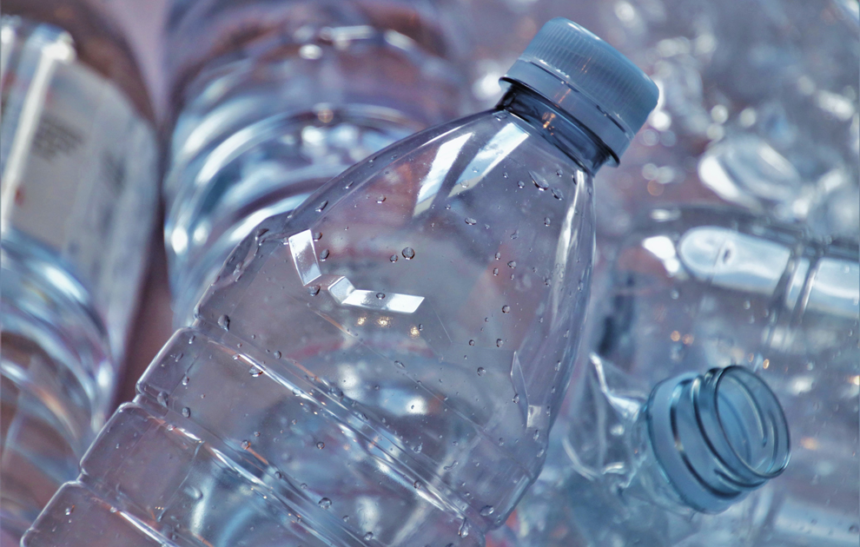
A truck arrives at a factory carrying thousands of tonnes of material. Somewhere else in the same industrial system, another truck is carrying away what has been classified as waste.
Both loads may contain materials that cost money to extract, process, transport and manufacture. One is called an input. The other is called a disposal problem.
That distinction is beginning to look strangely outdated.
A significant shift in sustainability is taking place beneath the familiar language of recycling, carbon reduction and waste management. The more interesting question is becoming whether the industrial economy can stop treating materials as things that move through a factory once and start treating them as assets that can retain value through multiple lives.
This is a much bigger idea than recycling.
It reaches into product design, manufacturing, procurement, logistics, construction, agriculture, technology and finance. It also changes the role of sustainability itself. Instead of asking only how much environmental damage a business causes, organisations can increasingly ask a more commercially useful question: how much value are we allowing to disappear?
The Waste Problem Is Really a Design Problem
We tend to encounter waste at the end of a process. A product breaks. A building is demolished. A machine reaches the end of its useful life. A shipment arrives with packaging. A factory produces a by-product.
At that point, the instinct is to manage the waste.
But by then, many of the important decisions have already been made.
A product may have been designed with materials that are difficult to separate. Components may be glued together when they could have been mechanically joined. Different materials may be combined in ways that make recovery uneconomic. A machine may be impossible to repair because one small component is unavailable. A building may be designed for demolition rather than disassembly.
The waste appears at the end, but its origins are often found much earlier.
This is why circular economy thinking is becoming more strategically interesting. It moves the sustainability conversation upstream, into the decisions that determine what happens to materials before they ever become waste.
Recent global discussions around circular industry have increasingly focused on product longevity, material reuse, design, traceability and secondary raw materials rather than recycling alone. That represents an important conceptual change. The objective is not simply to process more waste. It is to prevent valuable material from losing its economic usefulness in the first place. :contentReference[oaicite:0]{index=0}
For an industrial leader, that can become a very different conversation.
Instead of asking, “How do we dispose of this responsibly?” the question becomes, “Why did we design a system in which this material becomes worthless?”
The Factory Is Starting to Look More Like a Material Network
Imagine a manufacturing company that knows not only how much steel, plastic, glass, chemicals or biological material enters its facilities, but where every significant material goes afterwards.
Some remains inside the product. Some returns to the factory. Some moves to another manufacturer. Some becomes a component in a different industry. Some can be recovered only if the product is designed to make that recovery economically worthwhile.
The factory is no longer an isolated building. It becomes one node in a much larger material network.
Technology is making this increasingly practical.
Digital product information, sensors, automated sorting, artificial intelligence, material identification and increasingly sophisticated supply-chain data can help companies understand what they have, where it is and what it might become next.
This matters because circularity has always suffered from an information problem.
A manufacturer may know the composition of its own product. A recycler may know what arrives at its facility. A buyer may know what it needs. But without information connecting those three points, potentially valuable material can still become waste.
Better traceability begins to close that gap.
Emerging international work on digital product information and interoperable sustainability data is specifically aimed at making material and environmental information more useful across complex value chains. :contentReference[oaicite:1]{index=1}
The implication is subtle but important. The circular economy may ultimately depend as much on information architecture as on recycling technology.
The New Resource May Be the Material Already in the Economy
For much of modern economic history, growth has been associated with finding more resources.
More iron ore. More timber. More minerals. More land. More energy. More raw materials.
A circular economy introduces another possibility: growth can increasingly come from getting more value from resources that have already been extracted.
That changes the economics.
A tonne of material that has already been mined, processed and transported represents embedded energy, labour, infrastructure and capital. If it can be reused without returning to the beginning of the extraction process, some of that previous investment can remain productive.
This is one reason circularity is moving closer to the centre of industrial strategy. It can potentially address several problems simultaneously: resource security, supply-chain resilience, waste, manufacturing costs and exposure to volatile raw-material markets.
The opportunity extends well beyond conventional recycling. Components can be refurbished. Products can be repaired. Materials can be recovered at higher quality. Industrial by-products can become inputs for other processes. Biological materials can be designed for repeated use within circular systems.
Research and policy work around bio-based materials is increasingly examining exactly this possibility: not simply replacing fossil-based materials with biological alternatives, but designing systems in which those materials can circulate, generate additional value and reduce dependence on virgin resources. :contentReference[oaicite:2]{index=2}
That distinction could become important.
A sustainable material is not necessarily one that has a different origin. It may be one that remains useful for much longer.
A New Kind of Competitive Capability
This raises an intriguing possibility for business.
The companies that become important in the next phase of sustainability may not all look like conventional environmental companies.
Some will develop better materials. Others will build systems for recovering components. Some will create software that tracks products throughout their lives. Others will develop industrial processes that turn one company’s by-product into another company’s raw material.
There will be opportunities in design, logistics, manufacturing, construction, agriculture, financial services, insurance and infrastructure.
Capital is beginning to recognise this broader opportunity. Recent analysis has identified investable opportunities across areas ranging from battery recycling and industrial water management to sustainable materials and precision agriculture, suggesting that nature and resource efficiency are increasingly being considered through the lens of business value as well as environmental benefit. :contentReference[oaicite:3]{index=3}
But circularity will not become meaningful simply because more businesses announce circular ambitions.
The difficult part is economic.
Recovered material has to be reliable. Secondary inputs need consistent quality. Collection systems have to work. Products must be designed for disassembly or repair. Buyers need confidence in what they are purchasing. Regulations and standards need to make material exchanges easier rather than more complicated.
In other words, the circular economy needs infrastructure.
That may be where some of its most interesting businesses emerge.
What If Sustainability Becomes Invisible?
There is an interesting irony here.
The more successful sustainability becomes, the less visible it may become as a separate corporate activity.
Today, sustainability can still sit beside procurement, product development, operations and finance as a distinct function.
But imagine a company where product designers automatically consider the next life of every component. Procurement teams evaluate virgin and recovered materials together. Finance recognises residual material value. Engineers design for repair. Logistics systems anticipate returns. Software records what a product contains. Factories exchange useful by-products. Customers expect products to remain valuable beyond their first owner.
At that point, sustainability is no longer an additional programme.
It is simply how the company operates.
This is perhaps the more profound transition now taking place. Sustainability is gradually moving from the question of how much less harm an organisation can cause toward the question of how intelligently it can use the resources already available to it.
That is not merely an environmental idea. It is an industrial one.
And it may eventually change the way we think about waste itself.
For generations, waste has meant something whose useful life is over. The emerging circular economy suggests a more interesting possibility: perhaps, in many cases, waste is simply a resource whose next use has not yet been designed.
The real breakthrough will not come when society learns to recycle everything.
It will come when we become much better at designing things that were never meant to become waste in the first place.